

Employee Wellness Programme Singapore (2026): Build One on $5, $15, or $50 per Head per Month


Most Singapore SMEs treat employee wellness as a single line item: "we have a $50 monthly gym subsidy." Then nobody uses it, the contract auto-renews, and the founder writes off wellness as soft and expensive. The real failure is structural - one perk, no system.
This guide tiers SG wellness programmes by realistic SME budget: $5, $15 and $50 per employee per month. Each tier is a complete stack, not a single line. Each is built around what the IRAS administrative concession list and the CPF Act actually allow you to do tax-free.
Last verified: 6 May 2026, with line-item costs sourced from current vendor pricing pages and government programme listings.
Table of Contents
1. Why most SG wellness programmes quietly fail
2. The 4 dimensions of workplace wellness (and what each costs)
3. The $5/head/month tier (free + cheap stack)
4. The $15/head/month tier (the SME sweet spot)
5. The $50/head/month tier (premium stack)
6. Free government and HPB resources you can plug in
1. Why most SG wellness programmes quietly fail
Three failure modes show up in nearly every SME post-mortem:
- Single perk, no portfolio - One $50 gym subsidy that 60 percent of the team will never use, with nothing for the 40 percent who would prefer mental health support, ergonomics or sleep coaching. The cost-per-actual-user becomes $80 to $120 per month.
- Cash reimbursements that trigger CPF - The team requests reimbursement for personal gym memberships, the company processes it as wages, and 17 percent employer CPF gets added on top. The $50 perk costs $59. Worse, the employee receives the money minus their own 20 percent CPF deduction.
- No measurement loop - Programme runs for 12 months, nobody tracks engagement or outcome, renewal becomes a default. A $30K wellness spend silently becomes ineffective because no one cleaned up the dead lines.
Building a working programme requires solving all three. A portfolio of options across mental, physical, financial and social wellness, structured as benefits-in-kind rather than reimbursements, with a quarterly engagement review.
Full CPF and tax mechanics for these benefits are covered in our employee benefits tax cheat sheet for Singapore.
'%20fill='url(%23a)'%20fill-rule='evenodd'%20opacity='.04'/%3e%3c/svg%3e)
2. The 4 dimensions of workplace wellness (and what each costs)
Every credible workplace-wellness framework (HPB, WHO, AON, Mercer) covers some version of these four. SMEs that try to cover all four cheaply outperform SMEs that overspend on one and ignore the others.
Wellness dimensions and SME cost ranges
Dimension | Per employee per month |
Physical (gym, ergonomics, posture, sleep, nutrition) | $5 to $80 |
Mental (counselling, meditation apps, peer support, EAP) | $3 to $40 |
Financial (savings tools, financial planning, debt support) | $0 to $15 |
Social (team experiences, group activities, peer recognition) | $2 to $20 |
The pattern: physical wellness is the most expensive and most over-funded line. Mental wellness is the most under-funded relative to need. Financial wellness is essentially free in Singapore (CPF, MAS MoneySense, free tools). Social is cheap but high-impact when done right.
A balanced programme allocates across all four rather than spending the entire budget on one. The tiers below structure the allocation.
3. The $5/head/month tier (free + cheap stack)
Total annual budget: roughly $60 per employee per year. This is the floor. It is mostly free government resources packaged thoughtfully, plus one or two $1 to $3 per month additions.
$5/head/month wellness stack ($60/year per employee)
Item | Monthly cost | Notes |
Healthy 365 app group challenges (HPB, free) | $0 | Step counting + healthy eating challenges with prizes |
MindSG digital mental health resources (HPB, free) | $0 | Free meditation, mood tracker, self-help |
MoneySense + CPF planning content (MAS, free) | $0 | Financial wellness via free official tools |
Workplace ergonomics review (one-off, MOM workshop) | $0 | Free or low-cost from MOM-affiliated providers |
Pantry stock (instant oatmeal, fruit, decaf, herbal tea) | $2 to $4 | Subsidised food and drinks at workplace - tax-free under IRAS |
Quarterly team wellness chat (15 min, structured) | $0 | Internal facilitation, agenda template |
Total monthly per employee | $2 to $4 | Plus value of zero-cost government resources |
The $5 tier looks like nothing on paper. In practice, a deliberate stack of free government resources plus a thoughtfully stocked pantry beats most $300/month single-perk programmes for engagement. The pantry alone is fully tax-free under the IRAS food and drinks at workplace concession.
Most SMEs at this tier underestimate the visibility upside of the pantry. Three $50 ingredient runs per month at NTUC (decent coffee, oats, fruit, biscuits, instant noodles, herbal tea) lands at $150 to $200/month for a 50-person team and is the perk the team mentions most often in informal conversation.
4. The $15/head/month tier (the SME sweet spot)
Total annual budget: roughly $180 per employee per year. This is where most well-run Singapore SMEs land. It buys a mental health platform, a meaningful gym option, and the everyday-life perks - all on top of the $5 tier baseline.
$15/head/month wellness stack ($180/year per employee)
Item | Monthly cost | Notes |
Everything in $5 tier | $2 to $4 | Maintain the free baseline |
Group mental health platform (Intellect, Mindline At Work, Naluri) | $3 to $6 | Per-employee SaaS, includes counselling sessions |
ActiveSG corporate plan or Anytime Fitness corporate | $3 to $5 | Discounted access for employees who actually use gym |
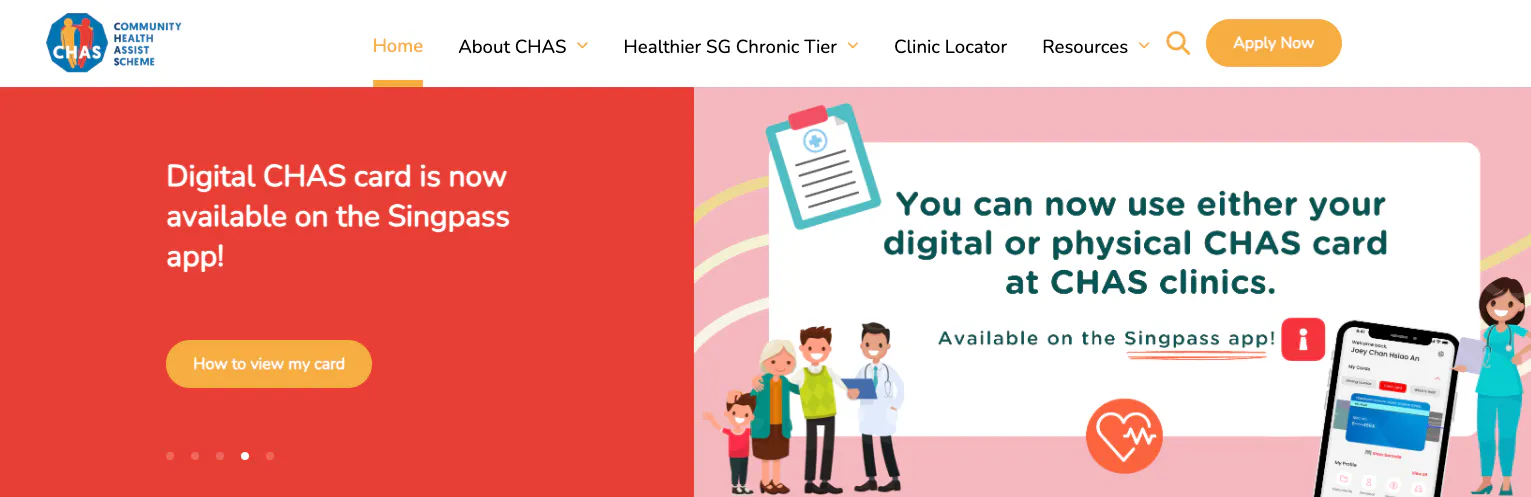
Quarterly health screening voucher (CHAS clinic partner) | $2 to $3 | Annualised cost; usually $80 to $120 per screening |
Employee discount platform (F&B, retail, attractions) | $5 to $10 | High-engagement everyday savings - non-cash benefit-in-kind |
Total monthly per employee | $15 to $28 | Stay disciplined; not all teams need every line |
Two specific calls within the $15 tier:
- Mental health platform over physical gym - At a fixed budget, mental health platforms tend to deliver better engagement than gym subsidies, especially in remote-friendly or hybrid teams. Singapore platforms like Intellect and Mindline At Work are designed for SG workforce specifically.
- Discount platform over wellness reimbursement - At $1 to $8 per head per month, a SG-built platform like Dive Perk delivers F&B, retail, attractions and travel deals weekly to the whole team. A $50/month gym reimbursement reaches maybe 30 percent. Cost-per-active-user is a different order of magnitude.
If you want to see what a discount platform actually offers, the best employee discounts in Singapore covers the typical menu.


5. The $50/head/month tier (premium stack)
Total annual budget: roughly $600 per employee per year. This is what mid-sized SMEs (50 to 200 staff) and growth-stage companies commonly run when wellness is treated seriously. Includes everything in $15 tier plus genuinely deep mental and physical support.
$50/head/month wellness stack ($600/year per employee)
Item | Monthly cost | Notes |
Everything in $15 tier | $15 to $28 | Maintain the foundation |
Gympass or full corporate gym partner | $15 to $35 | Multi-gym access network; better than single-gym deals |
Premium mental health platform (extended sessions) | $5 to $12 | Allows 4 to 8 counselling sessions per year per employee |
On-site physiotherapist or chiropractor (monthly visit) | $5 to $10 | For desk-bound teams; reimbursable as medical concession |
Annual full health screening (above CHAS basic) | $8 to $15 | Annualised; $200 to $400 per screening |
Year-round discount platform (Dive Perk or equivalent) | $1 to $8 | Everyday F&B, retail and lifestyle savings as the daily engagement layer |
Wellness reimbursement (medical-only flex, CPF-free) | $5 to $10 | Strictly medical/dental scope to avoid CPF trap |
Total monthly per employee | $53 to $110 | Cut lines that do not engage; do not chase the $50 number for its own sake |
At this tier, the most common mistake is cash reimbursement bloat. The flex-ben CPF trap is real: if you reimburse personal gym memberships, holiday expenses or non-medical wellness purchases, both employer and employee CPF apply. A $50 personal gym reimbursement actually costs the employer $58.50 (with CPF) and reaches the employee as $40 (after their CPF and marginal tax).
The cleanest $50 tier keeps reimbursements strictly inside the medical and dental concession (which is CPF-free per CPF Board guidance) and routes everything else through corporate accounts and benefits-in-kind. Same headline budget, dramatically better effective value to employees.
6. Free government and HPB resources you can plug in
Singapore has unusually rich free workplace wellness infrastructure. Most SMEs underuse it. As of 2026, the live programmes are:
- Healthy 365 app (HPB, free) - Step challenges, healthy eating tracker, group challenges. Companies can run internal challenges using the app's group features. Vouchers and prizes available through the app's reward system.
- MindSG (HPB, free) - Singapore's centralised mental health portal. Includes self-help modules, mood tracking, hotlines, and pathway to professional support.
- Mindline At Work (MOH-supported) - Free mental wellbeing platform specifically designed for working adults in Singapore. Workplace-friendly content, no signup barrier.
- MoneySense and CPF financial planning (MAS, free) - Free financial planning content, retirement calculators, and CPF planning tools. Build a 30-minute internal session around these once a quarter.
- MOM workplace safety and ergonomics resources (free) - Workplace ergonomics guidance, office workstation assessment frameworks. Useful for desk-bound teams.
Note: HPB's Workplace Outreach Wellness (WOW) Programme concluded on 28 February 2026 after running for years. Companies that previously relied on WOW for free workplace screenings and ergonomics activities now need to source these privately or use the Healthy 365 + MindSG digital alternatives. Confirm current programme status with HPB directly.
Practical: build the free government tools into your $5 baseline and treat anything you pay for as an addition rather than a substitute. The team uses Healthy 365 group challenges anyway; running an internal one costs zero and creates more engagement than most paid wellness vendors.
7. The CPF + tax treatment per line item
This table is the difference between a $15 tier costing the company $15 per employee and the same headline programme costing $20 to $22 with CPF dragged into wage.
Tax + CPF treatment of common wellness lines
Wellness line item | Income tax | CPF treatment |
Group hospitalisation insurance (employee + family) | Tax-free (concession) | CPF-free |
Group medical/dental insurance | Tax-free | CPF-free |
Mental health platform subscription | Tax-free (benefit-in-kind) | CPF-free |
Corporate gym partnership (company is the corporate member) | Tax-free (concession) | CPF-free |
Country club membership | Excluded from concession | CPF-able if cash equivalent |
Reimburse personal gym membership receipt | Wage | CPF-able |
Reimburse personal mobile phone bill | Wage | CPF-able |
Reimburse holiday expenses or personal travel | Wage | CPF-able |
Reimburse medical/dental treatment | Tax-free | CPF-free per CPF Board |
Workplace pantry food and drinks | Tax-free (concession) | CPF-free |
Health screening at company-arranged provider | Tax-free | CPF-free |
Discount platform subscription (staff discount concession) | Tax-free | CPF-free |
Pattern: corporate-arranged benefits-in-kind are almost always CPF-free and tax-free. Cash reimbursements for personal expenses are wages and trigger CPF. The same dollar lands very differently depending on how it is structured.
8. Measuring whether your programme is working
Most SMEs measure wellness by spend. That is the wrong metric. Spend tells you what you paid; engagement and outcomes tell you what you got.
Three metrics worth tracking quarterly
- Active utilisation rate per line - Of the people who could use this benefit (eligible team), how many used it at least once this quarter? Below 30 percent = consider replacing the line. Above 70 percent = expand it.
- MC (medical leave) days per FTE per quarter - Trending up could indicate stress, illness or under-supported physical health. Trending down (without sandbagging) could indicate the wellness stack is working. Year-on-year comparison is more useful than absolute number.
- Engagement survey score on "my company cares about my wellbeing" - One question, scored 1 to 5 quarterly. Anonymous. Track the trend, not the absolute. Sub-3.5 is a problem regardless of how much you are spending.
Anti-pattern to watch for
If you are spending $50/head and the team can name fewer than 3 specific benefits in a free-text survey, the programme is not working. Either you are over-communicating to nobody or you are over-investing in lines nobody uses.