

Best Credit Cards for GrabFood and Foodpanda Singapore 2026: Cashback and Miles

Best credit cards for food delivery in Singapore: the short answer
If you order foodpanda often, the DBS yuu Card is the highest-earning option in Singapore right now: 18% cashback or 10 miles per dollar, capped at S$800 per month.
If you order GrabFood mostly, or split across both apps, the POSB Everyday Card is the cleanest 10% cashback play with no card-juggling.
If you collect miles, the Citi Rewards Card and DBS Woman's World Card both earn 4 mpd on food delivery with a S$1,000 monthly cap each. Stack them across the month for double the cap.
Why this matters more than you think
Food delivery is one of the few categories where credit card rewards routinely beat the platform's own promo codes. A 10% cashback card running daily wins out over a 25% off promo code that fires once a month with a S$30 minimum.
The trap most people fall into: using a generic dining card on a food delivery transaction that gets coded as MCC 5814 (Fast Food). Several premium dining cards exclude this exact code, so you earn zero bonus on what you thought was a 4 mpd transaction.
Which card to use, by your situation
Your spending profile | Best card | Why |
foodpanda heavy user (S$300+/month) | DBS yuu Card | 18% cashback (or 10 mpd) on foodpanda. Capped at S$800 spend per month. |
GrabFood heavy user | UOB One Card or POSB Everyday | Up to 10% cashback. UOB One pays out quarterly with tiered minimum spend. |
Mix of both apps, low fuss | POSB Everyday Card | 10% cashback works on both platforms. S$800 min, S$206 cap per month. |
Casual orderer (<S$200/month) | Citi Rewards (miles) or HSBC Live+ (cashback) | No or low minimum spend. Earn rate is meaningful even on small orders. |
Miles collector with high spend | DBS yuu Card + Citi Rewards stacking | 10 mpd on foodpanda first (S$800), then 4 mpd on the rest via Citi Rewards. |
Already on pandapro / GrabUnlimited | Same cards apply | The subscription removes delivery fees. Card cashback applies to whatever you actually pay. |
GrabFood and foodpanda card quick answer by search intent
The most-searched questions split by app and by condition: which card wins on GrabFood, which wins on foodpanda, which works with no minimum spend or uncapped cashback, and why some dining cards earn almost nothing because of the MCC 5814 fast-food coding.
Food delivery card answers people search for
Search intent | Short answer | Where to read below |
Best card for GrabFood cashback | UOB One (up to 10% with conditions) or POSB Everyday (10%, no merchant rules). Confirm caps and minimum spend. | Best cashback cards section |
Best card for foodpanda | DBS yuu is the highest at up to 18%; POSB Everyday at 10% is the simpler no-rules pick. | Best cashback cards section |
No minimum spend or uncapped cashback | POSB Everyday and HSBC Live+ are the low- or no-minimum picks; always check the current cap before relying on uncapped. | Best cashback cards section |
GrabFood and foodpanda MCC | Delivery often codes as fast food (MCC 5814), which is why some dining cards earn little on it. | The MCC 5814 trap section |
Deliveroo credit card cashback | The same MCC 5814 logic applies; use the cashback cards above and check the category before ordering. | The MCC 5814 trap section |
Miles on food delivery | DBS yuu (up to 10 mpd on foodpanda) and Citi Rewards (4 mpd on both apps, S$1,000 cap). | Best miles cards section |
'%20fill='url(%23a)'%20fill-rule='evenodd'%20opacity='.04'/%3e%3c/svg%3e)
Best cashback cards for food delivery
Cashback is simpler than miles. The card pays you a percentage of your spend, capped per month or quarter. Below are the four cards worth your attention, ranked by effective rate per typical spend.
1. DBS yuu Card: 18% cashback on foodpanda (the highest in Singapore)
Earn 18% cashback on foodpanda food delivery, capped at roughly S$144 per month (the cap is structured as S$822 of qualifying spend at 18%). The catch: you must hit S$800 minimum spend on the card per calendar month, and that spend must touch at least 4 different yuu merchants.
yuu merchants include foodpanda, Cold Storage, Giant, 7-Eleven, Guardian, SimplyGo, and CHAGEE. If your monthly grocery + food delivery + transport already crosses S$800, this card is a no-brainer.
2. POSB Everyday Card: 10% on both apps, no merchant rules
Earn 10% cashback on online food delivery (both foodpanda and GrabFood), capped at S$206 per calendar month. Minimum spend is S$800 across all categories.
This is the default recommendation for anyone who doesn't want to think about merchant lists or quarterly tiers. It also pays 10% on Sheng Siong, utilities, and SimplyGo, so the S$800 minimum is easy to clear.
3. UOB One Card: up to 10% on GrabFood (with conditions)
Earn up to 10% cashback on GrabFood specifically, but the structure is fiddly: you need to hit S$600, S$1,000, or S$2,000 minimum spend per statement month for 3 consecutive months in a calendar quarter. Cashback pays out at the end of the quarter, not monthly.
Worth it only if you have stable monthly spend and don't mind the lockup. Most casual users will under-earn versus POSB Everyday's monthly structure.
4. HSBC Live+: 5% with low minimum spend
Earn 5% cashback on food delivery, capped at S$5,000 per calendar quarter. Minimum spend is S$600 per month for 3 consecutive months.
Lower headline rate than DBS yuu or POSB Everyday, but the S$600 minimum is the easiest threshold to hit consistently. Good middle-ground card if you spread spending across many categories.
| Card | Bonus/Rewards | Terms |
UOB One 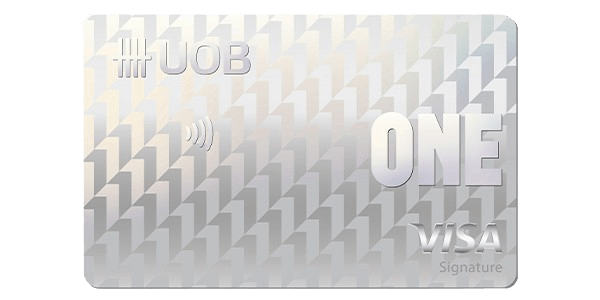 Apply by 30 Sept 2026 | First NTC at 2pm & 10pm:
Remaining NTCs:
| Apply for any participating UOB Credit Card, be an approved new-to-card (NTC) customer, and spend at least S$500 within the first month. Terms and Conditions apply. |
Best miles cards for food delivery
Miles cards earn rewards points (or miles) per dollar spent. The standard food delivery rate is 4 miles per dollar (mpd), with one outlier (DBS yuu) at 10 mpd on foodpanda only.
1. DBS yuu Card: 10 mpd on foodpanda
Earn 10 mpd on foodpanda spend, capped at S$800 per calendar month (so 8,000 miles maximum). Same 4-merchant minimum applies. Same card as the cashback option above. Choose 10 mpd or 18% cashback per billing cycle.
The MileLion calls this the only logical option for foodpanda spend. Worth noting: DBS yuu points convert to KrisFlyer at a less favourable ratio than HSBC or Citi points, so if you're a strict miles maximiser, the cashback option is often more rupee-for-rupee valuable.
2. Citi Rewards Card: 4 mpd on both apps, S$1,000 cap
Earn 4 mpd on online transactions including food delivery on both foodpanda and GrabFood, capped at S$1,000 per statement month. No minimum spend required.
Citi Rewards points are arguably the most flexible miles currency in Singapore: 5-year validity (versus 1 year for DBS Woman's World), 11 transfer partners, and they pool across all Citi cards. The default miles card for food delivery if you only carry one.
3. DBS Woman's World Card: 4 mpd, separate cap from Citi
Earn 4 mpd on online transactions, capped at S$1,000 per calendar month. The killer feature: it stacks with Citi Rewards cleanly because the caps are separate.
Use Citi Rewards for the first S$1,000 of food delivery in your statement month, then switch to DBS Woman's World for the next S$1,000. Effective monthly cap doubles to S$2,000 of 4 mpd spend.
4. Maybank XL Rewards: 4 mpd if you can hit S$500 minimum
Earn 4 mpd on food delivery, capped at S$1,000 per calendar month. Minimum spend is S$500 per month across all categories.
Worth holding only if you also use it for dining, hotels, or air tickets. The 4 mpd applies across multiple categories, which makes hitting the S$500 minimum easy.
| Card | Bonus/Rewards | Terms |
HSBC Revolution 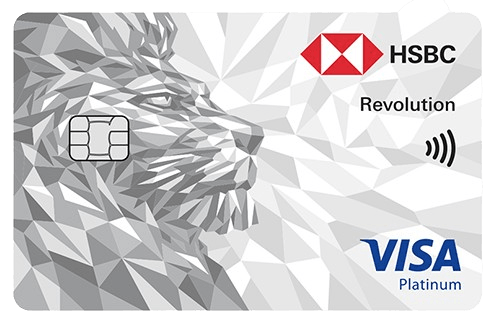 Apply by 23 Sept 2026 | Choose from:
| New HSBC credit card holders only Min spend $500 by the end of the following calendar month from card account opening date. |
| Card | Bonus/Rewards | Terms |
Citi Rewards 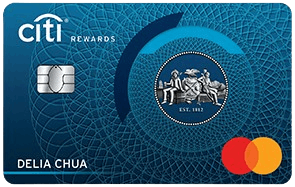 Apply by 30 Sept 2026 | Choose one:
| New Citi credit card holders only Activate the Eligible Card and spend a minimum of S$500 within 30 days of card approval date Card must remain valid and in good standing, and not be cancelled, for 12 months from the date of approval to retain the reward. Terms and Conditions apply. |
| Card | Bonus/Rewards | Terms |
Maybank Family & Friends  | There is no promotion at the moment. | - |
The HSBC Revolution MCC 5814 trap (worth its own warning)
The HSBC Revolution Card earns 4 mpd on dining and online transactions, capped at S$1,500 per calendar month (boosted from S$1,000 till 31 March 2026). On paper it looks great for food delivery.
The catch: HSBC Revolution explicitly excludes MCC 5814 (Fast Food). foodpanda always codes as 5814. GrabFood codes as 5812 or 5814 depending on the restaurant, with no clear pattern.
Net effect: foodpanda transactions on HSBC Revolution earn zero bonus miles. GrabFood is roughly a coin flip per order. If you're holding HSBC Revolution specifically for food delivery, you're losing money on every foodpanda order.
Use HSBC Revolution for Atome, hotels, and air tickets where it shines. Pick a different card for food delivery.


Stacking: card × promo code × subscription
The biggest unforced error in food delivery savings is treating cards, codes, and subscriptions as alternatives. They stack.
Layer 1: subscription removes delivery fees
pandapro and GrabUnlimited both remove the per-order delivery fee above a minimum spend. If you order 4 or more times per month from one platform, the subscription pays for itself.
Layer 2: promo code reduces the food cost
Platform-wide and restaurant-specific codes apply to the food subtotal. They are the most volatile saving (codes change weekly) but also the highest individual saving when one fires.
Layer 3: card cashback rewards the final paid amount
After the subscription removes the delivery fee and the promo code reduces the food, your card earns rewards on whatever you actually paid. This is pure compounding. No checkout step blocks it.
Worked example: a S$30 GrabFood order with GrabUnlimited (delivery fee removed, save S$5), a 20% off code (save S$6), then 10% cashback on the S$24 paid (S$2.40 back). Total saved: S$13.40 on a S$35 list price. The card layer alone is worth more than the typical 'thanks for ordering' email reward.
Other Singapore food and credit card guides
If you've decided on a card, the guides below help you stack it with the right platform, promo codes, or sign-up bonus.
- Foodpanda vs GrabFood Singapore: which platform is actually cheaper, subscription comparison, and platform-wide promo code patterns.
- Best credit card sign-up promotions in Singapore: the full hub of welcome offers, cash gifts, and miles bonuses across every issuer.
- KFC Singapore promo codes: the brand's own app deals usually beat both delivery platforms.
- McDonald's Singapore tips and tricks: McDelivery codes, app deals, and Happy Meal toy schedule.
- All Singapore promo codes: the full hub of currently-live deals across food, retail, travel, and more.
Card earn rates and caps verified from MileLion 2026 Credit Card Strategy (10 January 2026), Suitesmile Best Credit Cards For Food Delivery (8 April 2026), and individual issuer T&C pages on 8 May 2026. Card terms and bonus caps change frequently. Always check the issuer's current product page before applying or relying on a specific earn rate.
Frequently asked questions about credit cards for food delivery in Singapore
What is the highest cashback rate for food delivery in Singapore right now?
The DBS yuu Card pays 18% cashback on foodpanda spend, capped at roughly S$144 per month. This is the highest food-delivery cashback rate currently available in Singapore. Second place is POSB Everyday at 10% cashback on both foodpanda and GrabFood.
Do I really need a credit card for food delivery, or are promo codes enough?
Promo codes save more per individual order, but cards save more in aggregate. A 10% cashback card running on every order beats a 25% off promo code that fires once a month with a S$30 minimum. The right answer is to use both: code + card stack at every checkout. See our foodpanda vs GrabFood guide for stacking details.
Why do my food delivery orders earn 0 cashback on my dining credit card?
Most likely your card pays cashback on specific MCC codes, not the literal word 'dining'. foodpanda always codes as MCC 5814 (Fast Food), and GrabFood codes as 5812 or 5814. Cards like HSBC Revolution that exclude MCC 5814 will not pay any bonus on foodpanda transactions, and pay only sometimes on GrabFood.
Can I stack DBS yuu Card with promo codes on foodpanda?
Yes. The card and the promo code are independent layers. The promo code reduces the food cost at checkout, and DBS yuu pays 18% cashback (or 10 mpd) on whatever you actually pay after the code. Stack them on every order.
Is the UOB One Card better than POSB Everyday for GrabFood?
Only if you can hit the quarterly minimum-spend rules consistently. UOB One requires S$600 to S$2,000 minimum spend per statement month for 3 consecutive months. POSB Everyday's monthly S$800 minimum is more forgiving. For most casual orderers, POSB Everyday wins on flexibility.
Should I open a new credit card just for food delivery?
Only if your food delivery spend justifies the application effort. A rough rule: if you spend S$300+ per month on food delivery, opening a dedicated card pays back within 2 months via cashback alone. Below that, use whatever card you already have that earns at least some bonus on online or dining transactions. See our credit card sign-up promotions guide for current welcome offers worth chasing.
Do brand-specific apps (KFC, McDelivery, Burger King) earn the same card rewards?
Usually yes, and often the brand app codes beat both delivery platforms. KFC, Burger King, and McDonald's all run their own delivery apps with exclusive promo codes that don't appear on foodpanda or GrabFood. Pay with the same food-delivery card to double-stack: brand-app code + card cashback. See our KFC promo codes guide and McDonald's tips guide for the current app-only deals.
More food delivery deals: see our foodpanda vs GrabFood comparison for platform-wide patterns, or browse all Singapore promo codes for currently-live restaurant and delivery offers.
Want the full credit card picture?
Food delivery is one slice of credit card spend. If you want the full picture (cashback vs miles vs no-fee, by spend tier and persona), see the Best Credit Cards Singapore 2026 complete decision guide. It compares the same cards across every category and explains where MariBank fits as a wedge pick.
Want to cut the bill before you even pick a card? Our guide to the cheapest food delivery in Singapore covers how to dodge delivery fees and stack promos on any order.