


Childcare Subsidy Singapore 2026: Infant Care, Fees and ECDA Guide


Childcare subsidy Singapore 2026: quick answer
For a Singapore Citizen child in full-day care, the headline numbers are simple: infant care can receive $600 Basic Subsidy plus up to $710 Additional Subsidy, while childcare can receive $300 Basic Subsidy plus up to $467 Additional Subsidy.
That means the maximum monthly subsidy is up to $1,310 for full-day infant care and up to $767 for full-day childcare, before the minimum co-payment rule and your actual centre fee are applied.
Subsidy rates and income tiers can change. Use ECDA or LifeSG for the final assessed amount before choosing a preschool.
1. Childcare subsidy amounts in 2026
ECDA splits preschool help into Basic Subsidy and Additional Subsidy. The Basic Subsidy applies to all Singapore Citizen children in ECDA-licensed infant care or childcare centres. The Additional Subsidy is means-tested.
For full-day programmes, the 2026 subsidy amounts are as follows.
ECDA full-day infant care and childcare subsidy amounts
Programme | Working main applicant | Non-working main applicant |
Infant care, age 2 to 18 months | $600 Basic plus up to $710 Additional Subsidy | $150 Basic Subsidy, no Additional Subsidy by default |
Childcare, age 18 months to 6 years | $300 Basic plus up to $467 Additional Subsidy | $150 Basic Subsidy, with exceptions for lower-income childcare families |
Maximum monthly subsidy | Up to $1,310 for infant care or $767 for childcare | Usually $150 unless special rules apply |
These figures come from ECDA guidance for the infant and childcare subsidy scheme. The actual amount is still adjusted for your income tier, programme type, centre fee and minimum co-payment.
2. Who qualifies for ECDA subsidies
The child must be a Singapore Citizen and enrolled in an ECDA-licensed infant care or childcare centre. That is the baseline for Basic Subsidy.
Additional Subsidy depends mainly on the main applicant working status and household income.
ECDA subsidy eligibility at a glance
Question | 2026 rule | What it means |
Who is the main applicant? | Mother, or single father in divorced, separated or widowed cases | This is the person ECDA uses for working-status assessment |
What counts as working? | At least 56 hours per month | Full-time, part-time and freelance work can count |
Additional Subsidy income ceiling | HHI $12,000 or below, or PCI $3,000 or below for related households of 5+ | This is the current 2026 ceiling before the 2027 expansion |
Low-income non-working childcare cases | HHI $6,000 or below, or PCI $1,500 or below | SC childcare children can receive full childcare subsidies regardless of applicant working status |
'%20fill='url(%23a)'%20fill-rule='evenodd'%20opacity='.04'/%3e%3c/svg%3e)
3. Infant care subsidy in Singapore
Infant care is the higher-cost stage, so the subsidy is larger. For full-day infant care, a working main applicant gets $600 Basic Subsidy and may receive up to $710 Additional Subsidy, for a maximum of $1,310 a month.
- Age range. Infant care covers children aged 2 to 18 months.
- Best keyword match. Parents often search for infant care subsidy, infant care fees, ECDA subsidy calculator and maximum subsidy because this is the costliest preschool stage.
- Minimum co-payment still applies. If your subsidy is higher than the centre fee, ECDA can still require a small minimum co-payment instead of reducing the bill to zero.
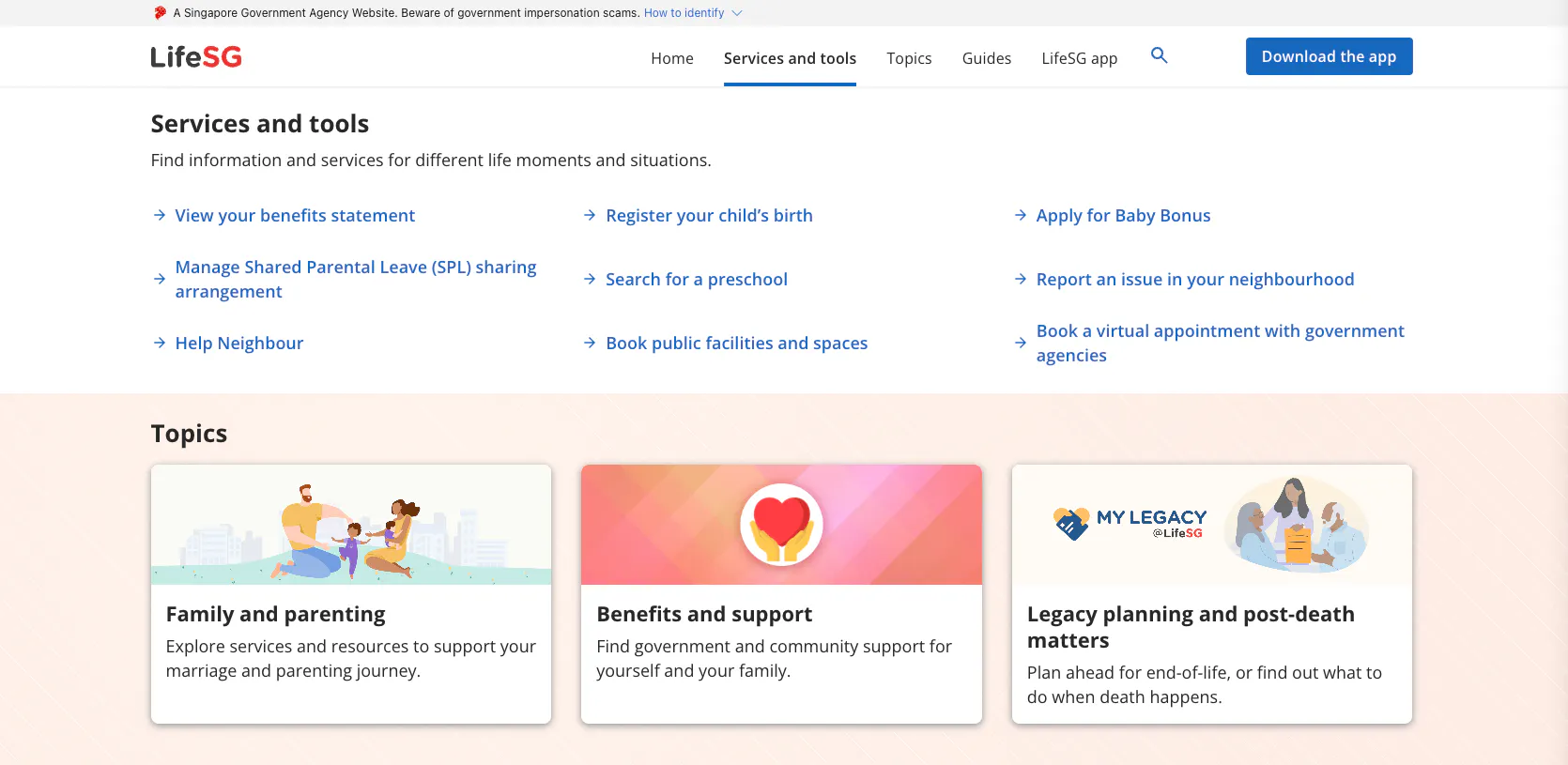
- Estimate before choosing a centre. Use LifeSG preschool search to compare estimated fees after subsidies before you commit.
4. Childcare fees and subsidy after 18 months
Once your child moves from infant care to childcare, the Basic Subsidy for a working main applicant is $300 a month, with Additional Subsidy of up to $467. The maximum full-day childcare subsidy is therefore up to $767 a month.
The other big 2026 fee signal is the government-supported preschool cap: since 1 January 2026, full-day childcare fees at Anchor Operator preschools are capped at $610, while Partner Operator preschools are capped at $650.
This is why searches like PCF childcare fees, childcare fees Singapore 2026 and childcare subsidy calculator overlap. PCF Sparkletots is an Anchor Operator, but exact branch and programme fees can vary, so confirm the final payable fee with the centre.
5. What changes in 2027
The biggest announced change is not a 2026 rule yet. From 1 January 2027, the gross monthly household income ceiling for Infant and Childcare Additional Subsidy and KiFAS will rise to $15,000.
MSF also said income thresholds across subsidy tiers will be updated, and the enhancements are expected to benefit more than 60,000 families.
2026 vs 2027 preschool subsidy changes
Item | In 2026 | From 2027 |
Additional Subsidy HHI ceiling | $12,000 or below | $15,000 ceiling announced |
AOP full-day childcare fee cap | $610 from 1 Jan 2026 | Continue to verify with centre and ECDA updates |
POP full-day childcare fee cap | $650 from 1 Jan 2026 | Continue to verify with centre and ECDA updates |
Who benefits from 2027 update | Current eligible families plus some families above current ceiling | More than 60,000 families expected to benefit |
6. How to apply or estimate your subsidy
For most parents, the preschool helps with the subsidy application when your child enrols. ECDA has also rolled out online subsidy applications through LifeSG across the preschool sector.
- Use LifeSG first. Search for preschools and compare estimated fees after subsidies with Singpass before shortlisting centres.
- Apply at enrolment. Your preschool will guide the subsidy application or LifeSG process when your child joins.
- Request reassessment if circumstances change. You can ask for reassessment if your family income, work status or caregiving situation changes during enrolment.
- Remember attendance. Your child must attend preschool for at least one day in a month to be eligible for subsidies for that month.
Useful official links: ECDA application process, LifeSG preschool search and the MSF 2026 subsidy update.


7. Special Approval and extra help
If the main applicant is not working, do not assume you are stuck at the basic amount. ECDA has Special Approval pathways for specified situations, and some lower-income households can receive maximum preschool subsidies.
- Specified non-working reasons. These include looking for work, studying or training for at least 56 hours per month, pregnancy, medical unfitness, caregiving and other ECDA-listed cases.
- Public rental and ComCare households. Families under HDB public rental or MSF ComCare assistance can be eligible for maximum preschool subsidies under Special Approval until the next fixed point of assessment.
- Non-parent caregivers. Legal guardians, foster parents and other non-parent caregivers may also apply for higher subsidies on a time-limited basis, subject to ECDA rules.
This section is especially important for families who search for how much childcare subsidy can I get but do not fit the standard dual-income example.
8. Related new-parent money guides
Childcare subsidy is only one part of the family support stack. These related guides help you map the rest of the money around a child.
- New parent money stack and Baby Bonus: the full first-child support stack, including CDA and government credits.
- LifeSG Credits guide: how the 2026 child credits work and where families can use them.
- Singapore government payouts schedule: the full calendar of cash, vouchers and support schemes.
- Assurance Package 2026: the final cash tranche and what replaces it after 2026.
- GST Voucher guide: cash, MediSave, U-Save and S&CC rebates explained for 2026.
9. Frequently asked questions about childcare subsidies
What is the new child care subsidy in 2026?
For 2026, the key current change is lower full-day childcare fee caps at Anchor Operator and Partner Operator preschools: $610 and $650 respectively from 1 January 2026. The bigger income-ceiling expansion for Additional Subsidy starts from 1 January 2027.
How much subsidy can I get for infant care?
For full-day infant care, a working main applicant can receive $600 Basic Subsidy plus up to $710 Additional Subsidy, or up to $1,310 a month before minimum co-payment and centre-fee limits.
What is the maximum childcare subsidy in Singapore?
For full-day childcare from 18 months to 6 years, the maximum is $300 Basic Subsidy plus up to $467 Additional Subsidy, or up to $767 a month for a working main applicant who qualifies for the maximum Additional Subsidy.
How much are childcare fees in Singapore in 2026?
At government-supported preschools, full-day childcare fees are capped at $610 for Anchor Operators and $650 for Partner Operators from 1 January 2026. Private preschool fees can differ, so check the centre and LifeSG estimated fee after subsidy.
How do I calculate my ECDA subsidy?
Use LifeSG preschool search with Singpass for estimated fees after subsidies, then confirm with the preschool during enrolment. The final subsidy depends on verified household income, working status, service type, centre fee and minimum co-payment.
Will the income ceiling become $15,000?
Yes, but from 1 January 2027. Singapore Budget 2026 announced that the gross monthly household income ceiling for Infant and Childcare Additional Subsidy and KiFAS will rise to $15,000 from the start of 2027.
If you are planning preschool fees, start with the subsidy table above, then check LifeSG for centre-level estimated fees. After that, map the rest of your family support through the new parent money stack and Singapore government payouts schedule.
Preschool fees are being cut and subsidies widened. See what changes under the SG Child Support Package and when.











![Top Family Friendly Holiday Destinations from Singapore [2026]](https://images.prismic.io/dive/aTvjJ3NYClf9oGZZ_Divedeals-1-.png?auto=format,compress)