

How to Choose a Brokerage Account in Singapore (2026 Guide)

How to choose a brokerage in Singapore: the short answer
The right brokerage account depends on three structural choices, not on which platform has the lowest commission this quarter.
First: CDP-held or custodian-held shares (only matters for Singapore stocks).
Second: how you want to be charged (per-trade commission, FX spread, or platform fee).
Third: which markets and products you trade (SG only, US heavy, ETFs only, or multi-asset).
Beginner buying SG blue chips for long-term hold: DBS Vickers Cash Upfront or FSMOne (CDP, low fees).
US ETF buyer doing monthly DCA: MooMoo or Tiger Brokers (custodian, fractional, low US commission).
Advanced multi-asset trader: Interactive Brokers or Saxo (full product breadth, lowest FX spread). The specific dollar costs shift each quarter; the structural fit is stable for years.
This guide focuses on the framework so the post stays useful as fees rotate. For the current best-rate quarter, check the broker websites directly. For the broader money geometry (where brokerage fits versus savings + fixed deposits), see the savings pillar.
Table of Contents
1. Quick verdict: which broker for which goal
2. CDP vs Custodian account: the structural difference
3. The 4 fee components every broker charges
4. Fractional shares: when they help and when they do not
5. FX spread: the hidden cost on US stocks
6. Product breadth by broker category
7. CDP-friendly brokers: DBS Vickers, FSMOne, Phillip, UOB Kay Hian, IG
8. Custodian and digital-first brokers: Tiger, MooMoo, Webull, Syfe Trade
9. Multi-asset advanced brokers: IBKR and Saxo
10. Funding mechanics and the card-bonus angle
11. Tax considerations: SG capital gains and US dividend withholding
1. Quick verdict: which broker for which goal
Your goal | Recommended broker type | Example brokers |
Buy SG blue chips, hold long-term, in CDP | CDP-friendly cash-upfront broker | DBS Vickers, FSMOne, UOB Kay Hian |
Buy US stocks or ETFs monthly (DCA) | Custodian, fractional support | MooMoo, Tiger Brokers, Syfe Trade |
Mix of SG, US, HK, ETFs (S$5,000+ portfolio) | Low-FX custodian or hybrid | Saxo, IBKR, Phillip POEMS |
Advanced: options, futures, multi-currency | Multi-asset broker | Interactive Brokers, Saxo |
SRS or CPF-IS investing | SRS/CPF-IS approved with low fees | Endowus, FSMOne, DBS Vickers (CPF-IS) |
First S$1,000 investment, beginner-friendly | Mobile-first with fractional | MooMoo, Tiger Brokers, Syfe Trade |
Robo-managed portfolio, low effort | Robo-advisor (not a brokerage) | Syfe, Endowus, StashAway |
2. CDP vs Custodian account: the structural difference
This is the structural question that confuses every new Singapore investor. CDP (Central Depository) is a securities account held directly with SGX. Custodian accounts mean your broker holds the shares on your behalf in their own pooled account. The difference matters only for Singapore-listed stocks; US, HK and global stocks are always custodian-held for retail investors in Singapore.
CDP-held shares: pros
- Shares legally in YOUR name, registered with SGX
- Direct dividend payments from SGX
- Vote at AGMs as registered shareholder
- If your broker collapses, your shares are unaffected (still with SGX)
CDP-held shares: cons
- Higher per-trade commission (typically S$10-25 vs S$2-3 for custodian)
- No fractional shares (must buy whole lots)
- Slower account setup and migration
Custodian-held shares: pros
- Much lower commission per trade
- Fractional shares supported
- Faster digital onboarding, multiple markets in one account
Custodian-held shares: cons
- Shares held in broker name; you own the beneficial interest only
- Dividends pass through broker, may carry small admin fee
- No direct AGM voting rights
- If broker collapses, assets usually safe (MAS-segregated) but recovery is slower than CDP
The decisive question
Do you primarily buy Singapore-listed stocks for long-term hold (10+ years)? CDP is worth the higher per-trade cost because shares legally belong to you. Buying US ETFs, monthly DCA, or active trading? Custodian wins on cost and flexibility, and the broker-bust risk is manageable for any MAS-regulated broker.
3. The 4 fee components every broker charges
Brokers earn from four fee components. Lower commission on the headline does not mean lower total cost; the other three components often dominate.
Fee component | Typical range | Who pays more |
1. Commission per trade | S$1 to S$25 | CDP brokers charge more than custodian |
2. FX spread (US/HK stocks) | 0.05% to 0.6% | Bank-affiliated brokers add spread; specialists like IBKR are closest to mid-market |
3. Platform / inactivity fee | S$0 to S$30/quarter | Saxo, IG, IBKR (for low-balance accounts) |
4. Withdrawal / FX conversion fee | S$0 to S$25/withdrawal | Some brokers charge per SGD withdrawal |
How to estimate total cost
For a S$1,000 US stock purchase with FX from SGD to USD: 0.5% FX spread = S$5. S$2 commission. Total S$7. The FX component (S$5) is the bigger cost. For frequent DCA into US markets, the FX spread is the most important fee to watch, not commission.
Free commission brokers
MooMoo, Tiger and Webull all offer free or near-free US stock commissions. They make money on the FX spread, securities lending, and order flow. The headline saving on commission is real but the FX spread should be checked separately, especially for large trades.
'%20fill='url(%23a)'%20fill-rule='evenodd'%20opacity='.04'/%3e%3c/svg%3e)
4. Fractional shares: when they help and when they do not
Fractional shares let you buy a portion of one share rather than a whole lot. On a US stock at US$500/share, you can buy 0.1 fractional shares for US$50 instead of the full US$500. This unlocks dollar-cost-averaging on expensive stocks (Berkshire, Costco, Nvidia at any moment) and on broad-market ETFs at any dollar amount.
When fractional helps
- Monthly DCA at a fixed dollar amount (e.g. S$500 to VOO each month)
- Building a 5-10 stock portfolio with only S$1,000 total
- Reinvesting small dividend payouts
When fractional does not help
- Singapore stocks: not fractional-eligible on any broker
- Selling fractional shares can be slower on illiquid stocks
- Some brokers charge fractional support as a paid feature tier
Brokers with strong fractional support
MooMoo, Tiger Brokers, Syfe Trade, IBKR (US stocks and ETFs). DBS Vickers and FSMOne support fractional for US stocks but at higher commission. CDP-linked SG stock purchases are never fractional.
5. FX spread: the hidden cost on US stocks
When you buy a US stock with SGD funds, the broker converts SGD to USD. The conversion rate offered is wider than the mid-market rate by a margin called the FX spread. On a S$10,000 US stock purchase, a 0.5% spread costs S$50 in hidden conversion fees, on top of any commission.
Typical FX spreads (May 2026)
- Interactive Brokers: ~0.03% to 0.05% (closest to mid-market)
- Saxo: ~0.30% to 0.50%
- MooMoo / Tiger / Webull: ~0.30% to 0.60%
- Bank-affiliated brokers (DBS Vickers, OCBC Securities): ~0.50% to 0.70%
- FSMOne: ~0.30% to 0.50%
The multi-currency workaround
Some brokers let you hold USD balances inside your account (Saxo, IBKR, MooMoo for advanced users). You convert SGD to USD once at a better rate via your own bank (DBS multi-currency, YouTrip card, Wise transfer) and fund the broker in USD directly. Cuts the spread to one conversion rather than per-trade.
For travel money cards that handle the FX leg well, see the Best Travel Money Card Singapore guide.
6. Product breadth by broker category
Different brokers cover different markets and product types. Picking by product breadth matters if you want one account for everything; pick by category if you split portfolio across brokers.
Broker | SG stocks (CDP) | US/HK/Global |
DBS Vickers | Yes (CDP-linked) | US/HK, custodian |
FSMOne | Yes (CDP-linked) | US/HK/Global ETFs, unit trusts, bonds |
UOB Kay Hian | Yes (CDP-linked) | US/HK, custodian |
Phillip Securities (POEMS) | Yes (CDP-linked) | US/HK/Global, multi-asset |
Interactive Brokers (IBKR) | Custodian only | Global stocks, options, futures, bonds, FX |
Saxo | Custodian only | Global stocks, ETFs, options, futures, FX, bonds |
MooMoo | Custodian only | US, HK, SG, AU stocks, options on US |
Tiger Brokers | Custodian only | US, HK, SG, CN, AU stocks, options on US |
Webull | Custodian only | US, HK stocks, options on US |
Syfe Trade | Custodian only | US, HK stocks and ETFs only |
7. CDP-friendly brokers: DBS Vickers, FSMOne, Phillip, UOB Kay Hian, IG
Best fit if you primarily buy Singapore-listed stocks (blue chips, REITs, SG-listed ETFs) for long-term hold.
DBS Vickers Cash Upfront
DBS Vickers Cash Upfront has the lowest minimum commission for CDP-linked SG buys (typically the S$10 floor on small trades). Cash Upfront requires settlement from your linked DBS account before execution, which keeps commission low. Pairs well if you bank with DBS.
FSMOne
FSMOne combines CDP-linked SG trading with unit trusts, bonds, and global ETF coverage. Strong choice if you want one account for SG blue chips + global ETFs without juggling brokers. CDP-linked SG commission is competitive.
UOB Kay Hian and Phillip Securities (POEMS)
UOB Kay Hian and Phillip Securities are the traditional Singapore brokers, offering CDP-linked SG trades alongside research, IPO applications via the broker, and bond access. POEMS supports CPF-IS investing. Pick if you want institutional services with retail access.


8. Custodian and digital-first brokers: Tiger, MooMoo, Webull, Syfe Trade
Best fit if you primarily buy US/HK stocks, want fractional shares, or want fully digital onboarding.
MooMoo Singapore
MooMoo is the Futu Holdings retail brand. Strong free-commission promo for US stock trades, deep charting tools, fractional support, and a popular community feature. Custodian-held shares; SG stocks supported but not CDP-linked.
Tiger Brokers
Tiger Brokers is the Up Fintech retail brand. Similar to MooMoo on commission structure, with a slight edge on US options and a wider catalogue of CN and AU stocks. Custodian-held shares; mobile-first interface.
Webull and Syfe Trade
Webull focuses on US and HK stocks with options support. Syfe Trade is a no-frills mobile broker tied into the Syfe ecosystem; works well as a side broker if you also use Syfe robo for the bulk of the portfolio. Both custodian-held, both fractional-supported.
9. Multi-asset advanced brokers: IBKR and Saxo
Best fit for portfolios above S$10,000, multi-currency holdings, or trading beyond stocks (options, futures, bonds, FX).
Interactive Brokers (IBKR)
Interactive Brokers offers the lowest FX spread of any retail broker in Singapore (close to mid-market) and the widest product catalogue. The platform interface is power-user-focused; the learning curve is steep but the cost advantage is real for portfolios above S$10,000. IBKR Lite removes the platform fee for low-balance accounts.
Saxo
Saxo is the Danish multi-asset broker, MAS-licensed in Singapore. Cleaner interface than IBKR with similar product breadth. Slightly wider FX spread than IBKR but better customer service for retail accounts. Strong for traders wanting global stocks + options + FX in one account.
10. Funding mechanics and the card-bonus angle
Most brokers accept FAST, PayNow, or wire transfer. A few accept debit card top-ups; almost none accept credit card directly for funding (regulatory restriction). The card-bonus angle works in two specific scenarios.
Scenario 1: Debit-card-fundable brokers
Tiger Brokers and MooMoo occasionally accept debit card top-ups for first-time deposits, typically with a card-bonus stack (e.g. fund S$500 via DBS debit, get bonus shares). Promos rotate; check the broker before assuming. The DBS debit card pays a small cashback on the funding amount on top of the broker bonus.
Scenario 2: PayAll or CardUp routing
If you need to hit a credit card sign-up minimum spend (commonly S$1,000 to S$5,000 in 60 days), and your broker accepts bank-transfer funding but you want CC reward routing, Citi PayAll or CardUp can route a brokerage funding payment through your card at a 1.75-2% fee. Net math: card bonus minus fee minus cashback foregone. See the big purchases guide for the math.
FX-friendly cards for the multi-currency workaround
If you convert SGD to USD yourself via a card and then fund the broker in USD (the multi-currency workaround), pick a card with low FX markup. UOB Absolute Cashback at 1.5% uncapped cashback offsets most FX costs on funding. For miles collectors, HSBC Revolution at 4 miles per S$1 on online and contactless adds 1-2% effective value through KrisFlyer redemptions.
| Card | Bonus/Rewards | Terms |
UOB Absolute Cashback 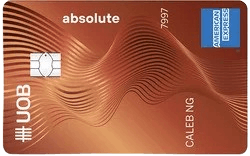 Apply by 31 Oct 2026 | Limited daily rewards (first 5 eligible applicants at 10 PM):
Other eligible applicants:
|
|
| Card | Bonus/Rewards | Terms |
HSBC Revolution 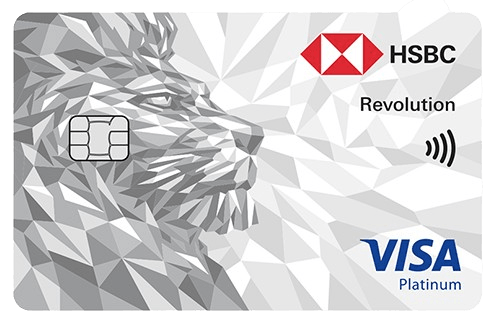 Apply by 25 Oct 2026 | Choose one:
Top-up options:
|
|
11. Tax considerations: SG capital gains and US dividend withholding
Singapore has no capital gains tax. Sell a stock at a profit and you keep all of it. This is a structural advantage over most jurisdictions, and it does not depend on which broker you use.
Dividend tax: SG-listed stocks
Dividends from Singapore-listed stocks (including SGX REITs) are tax-exempt for Singapore tax residents. The dividend hits your CDP or custodian account at full value.
Dividend tax: US-listed stocks
The US-Singapore double-taxation treaty does NOT cover dividends. US-listed stocks held by Singapore residents face a 30% US dividend withholding tax, applied regardless of broker. The tax is withheld at source.
Irish-domiciled ETF workaround
Many Singapore investors buy Irish-domiciled UCITS ETFs (CSPX for S&P 500, VWRA for global) instead of US-listed equivalents (VOO, VT). Irish domicile drops withholding from 30% to 15% on dividends received by the fund. On long-term wealth, this compounds. CSPX and VWRA are available on IBKR, Saxo, MooMoo, FSMOne.
Capital gains and inheritance tax
Singapore has neither. Estate planning and broker choice are independent decisions in Singapore (unlike US, UK, AU where some brokers handle estate liability differently).
12. FAQ
Q1: Should I use CDP or custodian for my first stock purchase?
If you are buying a Singapore blue chip (DBS, Singtel, SGX, REITs) to hold for 5+ years, CDP. If you are buying US ETFs or stocks under S$1,000 at a time, custodian. Many investors hold both: CDP for SG blue chips, custodian for US ETFs.
Q2: Is MooMoo CDP or custodian?
Custodian. MooMoo holds your shares in their own pooled account on your behalf. This is true even for Singapore-listed stocks bought via MooMoo. If you want CDP-held SG shares, use DBS Vickers, FSMOne, UOB Kay Hian, or Phillip Securities.
Q3: Is FSMOne CDP or custodian?
Both, depending on the product. FSMOne SG stock trades route through CDP by default. US/HK/Global stocks and ETFs are custodian-held in your FSMOne account. The same is true for DBS Vickers.
Q4: Cheapest brokerage for US stocks in Singapore?
Lowest total cost (commission + FX spread) on US$1,000+ trades: Interactive Brokers. Lowest headline commission for small trades: MooMoo, Tiger, Webull (free or near-free). The IBKR vs MooMoo crossover happens around US$2,000 per trade.
Q5: Can I use a credit card to buy stocks?
Not directly with most brokers (regulatory restriction). Some brokers allow debit card top-ups during sign-up promos. For credit card routing, use Citi PayAll or CardUp at a 1.75-2% fee.
Q6: How many brokerage accounts should I have?
Most retail investors do well with 1-2. Common setup: 1 CDP-linked broker (DBS Vickers or FSMOne) for SG blue chips, plus 1 custodian broker (MooMoo, Tiger, or IBKR) for US/global.
Related guides
For where brokerage fits in the broader money geometry (emergency fund, bonus savings, fixed deposits, then stocks), see the Best Savings Account Singapore 2026 pillar.
For the lower-risk alternative to stocks above bonus account caps, the Fixed Deposit vs T-Bills vs Singapore Savings Bond guide compares the three.
For the credit card decision (cashback vs miles, by spend tier), see the Best Credit Cards Singapore 2026 decision guide.
For CPF-IS investing mechanics and how to deploy CPF Ordinary Account funds via approved brokers, the CPF Retirement Sums Singapore guide is the starting point.