

Car Insurance Singapore 2026: The Credit Card Stack Guide


Car insurance Singapore 2026: the short answer
A typical Singapore car insurance premium is S$1,000 to S$2,500 a year for a standard private car. Most drivers pay close to the sticker rate. With a 4-layer stack (NCD + insurer promo + lump sum payment + the right credit card), you can pull 25-40% off without changing insurers or downgrading coverage.
May 2026 picks. DBS DriveShield offers 23% + 10% off through DBS card promos (rotating). HSBC Revolution earns 4 KrisFlyer or Asia Miles per S$1 if you pay online (around 8,000 miles on a S$2,000 annual premium). For uncapped cashback, MariBank Credit Card or UOB Absolute Cashback pay 1.5% flat (~S$30 back on the same premium).
All discount figures verified against insurer and card-issuer pages on 16 May 2026. Insurer promotions rotate every 1-3 months; check the live promo before paying.
Table of Contents
2. Layer 1: NCD (No Claim Discount)
3. Layer 2: Insurer promotions worth knowing
4. Layer 3: Lump sum vs monthly billing
5. Layer 4: Credit card on the premium
6. Best card for cashback on car insurance
7. Best card for miles on car insurance
8. PayAll and CardUp: routing for sign-up bonuses
9. Card x insurer combo: the partnership matrix
10. Renewal vs switching insurers
1. The 4 layers of the stack
Most drivers think car insurance is a single line item: get a quote, accept it, pay. In Singapore, the actual cost is a multiplication of four layers, each worth 3-15% on its own. Combined, they pull 25-40% off the sticker rate.
Layer | Typical saving | Where it comes from |
1. No Claim Discount (NCD) | 10% to 50% | Years of claim-free driving (ladder: 10/20/30/40/50%) |
2. Insurer promotion | 10% to 25% | Card-linked promos, multi-policy, online-only, referral codes |
3. Lump sum payment | 3% to 5% | Pay annually instead of monthly instalment |
4. Credit card on the premium | 1.5% to 5% | Cashback (1.5% flat) or miles (4 per S$1) |
Combined potential | 25% to 40% | On a S$2,000 premium: S$500 to S$800 saved |
2. Layer 1: NCD (No Claim Discount)
NCD is the biggest single lever. Singapore's NCD ladder applies across insurers, so it travels with you when you switch.
Years claim-free | NCD % | On a S$2,000 base premium |
0 (new driver) | 0% | S$2,000 |
1 year | 10% | S$1,800 (save S$200) |
2 years | 20% | S$1,600 (save S$400) |
3 years | 30% | S$1,400 (save S$600) |
4 years | 40% | S$1,200 (save S$800) |
5+ years | 50% (maximum) | S$1,000 (save S$1,000) |
Two rules every driver should know
Rule 1: NCD transfers between insurers. If you switch from FWD to Income with a 40% NCD, Income honours it from the start. The new insurer asks for an NCD certificate from your previous insurer.
Rule 2: One at-fault claim drops your NCD by 30%, not 100%. A 50% NCD becomes 20% after a single at-fault claim, not zero. Two at-fault claims in the same policy year wipe NCD entirely.
NCD Protector add-on
Most insurers sell an NCD Protector for S$50-100 a year. It guarantees your NCD level survives one at-fault claim per policy year. Worth buying if your NCD is 40-50% and your annual premium is S$2,000+ (one protected at-fault claim saves S$600+ in next-year premium).
'%20fill='url(%23a)'%20fill-rule='evenodd'%20opacity='.04'/%3e%3c/svg%3e)
3. Layer 2: Insurer promotions worth knowing
Insurer promotions rotate every 1-3 months. The biggest stacks in May 2026:
DBS DriveShield: 23% + 10%
The DBS DriveShield is the standout promo for May 2026. New customers get up to 23% off the standard premium, plus an additional 10% rebate when paying with a DBS or POSB credit card. Bundled with FWD as the underwriter.
Income Drivo and Singtel Car Protect
Income Drivo runs monthly promos in the 15-20% range, usually paired with a free top-up or 1 month free coverage. Singtel Car Protect (Singtel-distributed, AIG-underwritten) offers similar 15-20% discounts to Singtel mobile customers.
Direct Asia and FWD
Direct Asia (now part of HLAS) consistently offers 10-15% off plus a free first month for new customers. FWD offers similar levels through its own channel (separate from the DBS DriveShield bundle).
Trust Bank Car Insurance
Trust Bank Car Insurance is the newest entrant (May 2026). Pricing is competitive but discounts come through Trust+ membership tiers rather than rotating promos. Worth comparing if you already hold the Trust Cashback Credit Card.
4. Layer 3: Lump sum vs monthly billing
Most insurers offer a 3-5% discount for paying the annual premium up front instead of in monthly instalments. The discount is often buried in the quote, so most drivers default to the monthly tick-box without seeing the lump-sum alternative.
On a S$2,000 premium
- Monthly billing: 12 x S$170 = S$2,040 (a small admin fee usually applies)
- Lump sum: S$1,900 to S$1,940 (3-5% discount)
- Saving: S$60 to S$140, before card cashback and other layers
When monthly makes sense anyway
Cashflow management for new drivers, or if you intend to put the monthly bill on a card with a tiered cashback that you would not otherwise hit. The S$170 monthly bill helps hit the S$500 monthly trigger on UOB One or OCBC 360 bonus accounts. Sometimes the savings-account bonus is worth more than the lump-sum discount.
5. Layer 4: Credit card on the premium
Most insurers accept all major credit cards. Some charge a small admin fee (typically 1-2%) for credit card payment; others absorb it. Always check before paying.
Three goals you might have
- Goal A: maximum cashback (you do not collect miles)
- Goal B: maximum miles (you redeem for KrisFlyer or Asia Miles)
- Goal C: hit a card sign-up minimum spend (you have a new card promo to satisfy)
Each goal points to a different card. We cover all three in the next sections.
6. Best card for cashback on car insurance
For uncapped flat cashback on insurance payments, three cards lead in 2026:
1. MariBank Credit Card
1.5% unlimited cashback on local spend. No minimum, no cap, no annual fee. On a S$2,000 premium, S$30 cashback. The cleanest no-strings pick.
2. UOB Absolute Cashback
1.7% unlimited cashback (1.5% base + 0.2% bonus when you spend S$1,000 a month). Slightly higher than MariBank but the S$1,000 monthly trigger means you should already be using it as your everyday card to lock the bonus.
3. AMEX True Cashback
1.5% unlimited cashback, no minimum spend. Similar to MariBank but with the AMEX merchant-acceptance caveat: not every insurer accepts AMEX. Check the payment options before assuming it works.
Avoid cards with category-based cashback (UOB One, HSBC Live+, OCBC 365). Insurance payments typically do not qualify for the category bonus, so you fall back to the base rate (often 0.3-0.5%). The flat-rate cards above pay better on insurance.
| Card | Bonus/Rewards | Terms |
UOB Absolute Cashback 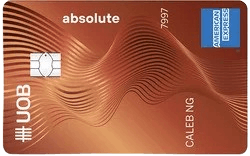 Apply by 31 Oct 2026 | Limited daily rewards (first 5 eligible applicants at 10 PM):
Other eligible applicants:
|
|


7. Best card for miles on car insurance
If you collect KrisFlyer miles, the math changes. A miles-earning card on a S$2,000 premium can deliver 8,000 to 10,000 miles, worth roughly S$120-200 of award flights.
1. HSBC Revolution (the leader)
4 miles per S$1 on online and contactless transactions. Most insurer payments are processed online, so Revolution earns the full 4 mpd. On S$2,000, that is 8,000 KrisFlyer or Asia Miles. No annual fee for life. Monthly bonus-miles cap: 10,000.
2. Citi Rewards
4 miles per S$1 on shopping and online, BUT insurance is in the excluded categories list. So Citi Rewards earns only the base 1 mile per S$1 on insurance payments. Still useful as a backup card for non-online insurance payments, but Revolution wins outright on this category.
3. KrisFlyer UOB Credit Card
3 miles per S$1 on dining, online food delivery and online shopping. Insurance is unclear category but typically earns the base rate (1.2 miles per S$1 with a minimum spend trigger). Skip unless you already hold it.
4. Premium miles cards (Citi PremierMiles, DBS Altitude)
1.2 to 1.3 miles per S$1 on local spend. Lower than Revolution but no cap. Worth using if you have already capped Revolution at 10,000 bonus miles this month and need to put insurance somewhere.
| Card | Bonus/Rewards | Terms |
HSBC Revolution 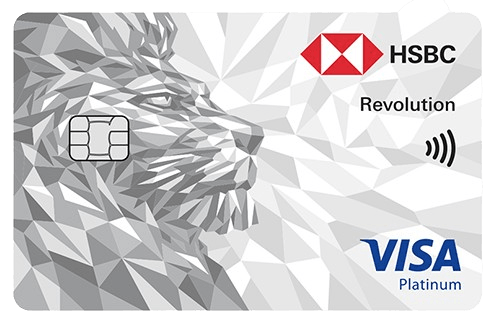 Apply by 25 Oct 2026 | Choose one:
Top-up options:
|
|
8. PayAll and CardUp: routing for sign-up bonuses
If you need to hit a credit card sign-up minimum spend (commonly S$1,000 to S$5,000 in 30-60 days), car insurance is a clean one-shot payment to satisfy it. Routing the premium through Citi PayAll or CardUp lets you charge it to ANY credit card (even cards that the insurer does not directly accept), at a fee of 1.75-2%.
Citi PayAll (Citi cards only)
Citi cardholders can use PayAll to charge insurance premiums. Standard fee 1.75% (rotates to 1.45% during promos). Earns the card's normal miles or cashback rate plus any sign-up bonus credit.
CardUp (most cards)
CardUp accepts most Singapore credit cards. Fee 2.5% standard, drops to 1.99% with promo codes. Useful when you need to use a non-Citi card and the insurer does not accept it directly.
When PayAll or CardUp makes sense
- You have a new card with a S$1,000-5,000 minimum spend in 30-60 days to claim S$200-500 sign-up bonus
- Net math: sign-up bonus minus routing fee minus card cashback foregone, all positive
- See our big purchases guide for the worked example of CardUp routing on tax and insurance
9. Card x insurer combo: the partnership matrix
Some insurer-card combos unlock bundled discounts on top of standard promos. May 2026 pairs to know:
Card | Insurer partner | Stacked benefit |
DBS or POSB credit card | FWD (via DriveShield) | +10% rebate on top of 23% promo |
UOB credit card | UOB Insurance (direct subsidiary) | UOB-only multi-policy discount up to 15% |
HSBC credit card | AIG (Premier customers) | ~5% bundle discount on AIG products |
Maybank credit card | AIG / Allianz | Occasional sign-up bonus (S$50-100) |
Singtel mobile + any card | Singtel Car Protect (AIG-underwritten) | ~15-20% discount via Singtel app |
Trust Cashback Credit Card | Trust Bank Car Insurance | Trust+ tier-based discount, varies |
Citi credit card | Multiple (via Citi Insurance partners) | ~5-10% rotating promo per insurer |
Check both the card-issuer promotions page and the insurer's direct site. Some promos appear on one but not the other, and the highest-stacking combos are usually buried in card-issuer landing pages, not insurer quote forms.
10. Renewal vs switching insurers
Singapore car insurers raise renewal premiums year-on-year by 8-15% even when you have a clean claim history. Loyalty discount does not exist; auto-renewal usually penalises you. Always quote 2-3 alternatives at renewal, even if you intend to stay.
When to stay
- Renewal quote within 10% of cheapest alternative quote
- You have a pending claim with the current insurer (switching mid-claim is messy)
- You have specific add-ons (windscreen, EV battery cover) that the cheaper insurer does not match
When to switch
- Renewal quote 15%+ above cheapest alternative for equivalent coverage
- You have built up 50% NCD (transferable across all insurers)
- Your car is moving out of a high-risk band (e.g. older driver age tier, lower-claim postal code)
How to switch cleanly
- Get the new insurer quote with same coverage tier and your NCD certificate from current insurer
- Confirm exact start date with new insurer to avoid coverage gap
- Cancel current policy from start of new policy (NOT before, to avoid 1-day coverage gap)
11. The full stack worked example
A driver with a Mazda 3, 5 years of NCD (50%), looking to renew in May 2026 with a S$2,000 base premium. Here is the full stack applied:
Step | What changes | Premium after |
0. Base quote (5 year NCD already applied) | Starting point | S$1,000 |
1. Switch to DBS DriveShield (FWD) | 23% off via promo | S$770 |
2. Pay via DBS card | 10% rebate on top | S$693 |
3. Choose lump sum vs monthly | 5% lump sum discount | S$658 |
4. Pay with DBS Live Fresh card online | 5% cashback online category (S$33) | S$625 effective |
5. Compared to base quote | 37.5% saving | S$375 saved vs base |
Total saving: roughly S$375 (37.5%) on a S$1,000 NCD-discounted base, or 67% below the no-NCD starting point of S$2,000. The stack is the difference between the sticker rate every aggregator quotes and the price savvy drivers pay in practice.
12. FAQ
Q1: Does paying car insurance via credit card cost extra?
Sometimes. Some insurers absorb the card-processing fee; others charge 1-2% on credit card payments. If the fee is 2% but the card cashback is only 1.5%, the net effect is -0.5% (you lose money). Always check the payment-option fine print before paying.
Q2: Can I stack DBS DriveShield with HSBC Revolution miles?
No. DBS DriveShield's 10% extra rebate is conditional on paying with a DBS or POSB card. If you pay with HSBC Revolution, you get the 23% base DriveShield promo but forfeit the 10% extra. Pick one route: maximum cash savings (DBS card) or maximum miles (HSBC Revolution paying a non-DriveShield insurer).
Q3: Does NCD reset if I change cars?
No. NCD attaches to you as the named driver, not the car. Sell or scrap your old car and buy a new one, your NCD carries forward to the new policy.
Q4: What is the cheapest car insurance in Singapore right now?
Cheapest base rate depends on your vehicle, age and postcode. Generally for private cars in May 2026: Direct Asia, FWD (direct, not via DriveShield), and Income Drivo are at the lower end. ECICS and BMW Insurance are higher. Always quote 3 insurers before deciding.
Q5: Should I pay for the NCD Protector?
Yes if your NCD is 40-50% and your annual premium is S$2,000+. The S$50-100 yearly cost saves you S$600+ of next-year premium hike if you have one at-fault claim. Skip if your NCD is below 30% (the protected drop is smaller).
Q6: Are there credit cards that come with free car insurance?
Not in Singapore for car insurance specifically. Some premium cards (Citi Prestige, HSBC Premier) include free travel insurance when you charge the trip to the card, but no card includes free car insurance. The closest analogue is the manufacturer's first-year insurance bundle on new car purchases.
Related guides
The credit card you pay with should also be the one that maximises returns on your other spend. See the Best Credit Cards Singapore 2026 decision guide for the cashback vs miles tier-by-tier comparison.
For routing large lump-sum insurance premiums via Citi PayAll or CardUp to chase sign-up bonuses, the Best Credit Card for Big Purchases Singapore guide has the spend math.
If you also pay for petrol on the same card, the Petrol Loyalty Programme Singapore guide compares Esso, Shell, Caltex, SPC, and Sinopec with stacking math.
If you also employ a Foreign Domestic Worker, the maid insurance buying guide covers MOM mandatory minimums and which card to pay that premium on too.
Car insurance is one of 3 legally-required covers in Singapore. For where motor sits versus health, life and critical illness in priority order, see the Insurance Singapore Guide: Which Cover Do You Need.